
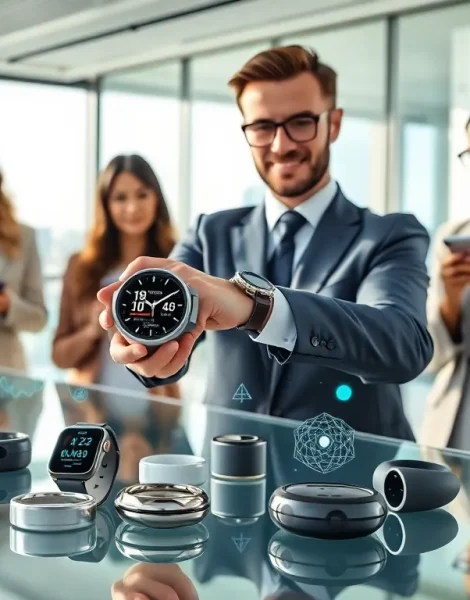
Wearables trends 2026 point to a year of significant innovation. The wearable technology market continues to grow rapidly, with global shipments expected to exceed 500 million units. Consumers want devices that do more than count steps. They expect accurate health data, smarter AI features, and longer battery life. This year, manufacturers are responding with products that blend seamlessly into daily life while delivering meaningful insights. From advanced biosensors to sustainable materials, the wearables trends 2026 brings will reshape how people interact with their health and technology. Here’s what’s coming.
Table of Contents
ToggleKey Takeaways
- Wearables trends 2026 highlight medical-grade health monitoring, including non-invasive glucose sensors and FDA-cleared blood pressure monitors on your wrist.
- AI-powered features transform wearables into proactive health assistants that deliver personalized coaching and predictive health alerts.
- Smart rings, patches, and glasses are rising as popular alternatives to smartwatches, offering discreet tracking that fits seamlessly into daily life.
- Extended battery life gets a major boost from energy-efficient chips and solar charging technology, with some devices lasting weeks without plugging in.
- Sustainability takes center stage in wearables trends 2026, with manufacturers using recycled materials, modular designs, and eco-friendly packaging.
Health Monitoring Gets More Advanced
Health monitoring remains the primary driver of wearable adoption. In 2026, wearables trends show a clear shift toward medical-grade accuracy. Devices now track metrics that previously required clinical equipment.
Continuous glucose monitoring (CGM) without needles is becoming a reality. Several major brands have announced non-invasive glucose sensors for their smartwatches. This development matters for the estimated 537 million adults living with diabetes worldwide. Real-time glucose data on a wrist could change how millions manage their condition.
Blood pressure monitoring is also improving. Traditional cuff-based measurements are giving way to optical sensors that read arterial pressure through the skin. Apple, Samsung, and Garmin have all invested heavily in this technology. Regulatory approvals are progressing, and 2026 may see the first FDA-cleared wrist-worn blood pressure monitors hit the market.
Mental health tracking is another area gaining traction. Wearables now analyze stress levels through heart rate variability, skin temperature, and sleep patterns. Some devices can detect early signs of anxiety or depression and prompt users to take action. This proactive approach to mental wellness reflects broader wearables trends 2026 is bringing to the forefront.
Sleep tracking has moved beyond basic metrics. New sensors can identify sleep apnea episodes, track REM cycles with greater precision, and even detect nighttime breathing irregularities. For users who struggle with sleep quality, these insights provide actionable data without requiring a formal sleep study.
AI-Powered Features Take Center Stage
Artificial intelligence is transforming wearables from passive trackers into proactive health assistants. Among wearables trends 2026, AI integration stands out as the most transformative development.
On-device AI processing is now standard in premium devices. This means faster responses and better privacy since data doesn’t need to travel to cloud servers. Your watch can analyze workout form, detect falls, and identify irregular heart rhythms, all without an internet connection.
Personalized coaching is getting smarter. AI algorithms learn individual patterns over time. They notice when a user’s resting heart rate creeps up before illness strikes. They recognize when sleep debt accumulates and suggest recovery strategies. This isn’t generic advice from a database. It’s customized guidance based on months or years of personal data.
Voice assistants on wearables have improved dramatically. Natural language processing lets users ask complex health questions and receive meaningful answers. “How did my heart rate compare during yesterday’s run versus last week?” is a question today’s wearables can answer accurately.
Predictive health alerts represent another frontier. Wearables trends 2026 include devices that can warn users about potential health issues before symptoms appear. By analyzing subtle changes in biometric data, AI can flag concerns like atrial fibrillation, respiratory infections, or even early signs of COVID-19. These early warnings give users time to seek medical attention proactively.
AI also powers smarter battery management, display optimization, and sensor activation. The result is devices that work harder while using less power.
Smart Rings and Alternative Form Factors Rise
Not everyone wants to wear a smartwatch. This reality is driving one of the most exciting wearables trends 2026 offers: the rise of alternative form factors.
Smart rings have emerged as a popular choice. Oura, Samsung, and several startups now offer rings that track sleep, activity, heart rate, and even stress. These devices appeal to users who prefer a subtle, jewelry-like appearance. They’re also popular among athletes who find watches uncomfortable during certain activities.
The smart ring market is projected to grow by over 25% in 2026. New entrants are adding features like NFC payments, two-factor authentication, and gesture controls. Some rings now include temperature sensors accurate enough to predict menstrual cycles or detect fever.
Smart patches are gaining ground in healthcare settings. These adhesive sensors stick to the skin and monitor vital signs continuously. Hospitals use them for patient monitoring, but consumer versions are entering the market. They’re particularly useful for tracking specific conditions over days or weeks.
Smart glasses are experiencing a resurgence. Meta’s Ray-Ban partnership proved there’s demand for glasses that look normal while offering smart features. In 2026, wearables trends include more brands launching stylish smart glasses with improved battery life and AI assistants.
Earbuds continue evolving beyond audio. Many now include heart rate sensors, temperature monitoring, and fall detection. For users who always have earbuds in, this form factor makes health tracking effortless.
These alternative designs address a key limitation of traditional wearables. They meet users where they are, fitting into existing habits rather than demanding new ones.
Extended Battery Life and Sustainable Design
Battery life has long frustrated wearable users. Charging a device daily, or worse, multiple times daily, undermines the always-on monitoring that makes wearables valuable. In 2026, wearables trends show manufacturers finally addressing this pain point.
New chip architectures consume less power while delivering more processing capability. Qualcomm and Apple have both announced processors designed specifically for wearables that cut energy consumption by up to 40%. These chips enable features like always-on displays without destroying battery life.
Solar charging is moving from niche to mainstream. Garmin pioneered solar-powered watches, and competitors are following. The latest solar cells can add hours of battery life from brief sun exposure. For outdoor enthusiasts, some models now promise weeks of use without plugging in.
Sustainability has become a selling point. Consumers care about environmental impact, and manufacturers are responding. Wearables trends 2026 include devices made with recycled aluminum, ocean-bound plastics, and bio-based materials. Apple now uses 100% recycled rare earth elements in its watch magnets. Samsung and Google have made similar commitments.
Repairability is improving too. The European Union’s right-to-repair legislation has pushed manufacturers to design devices that users and independent shops can fix. Replaceable batteries, modular components, and longer software support extend device lifespans.
Packaging waste is shrinking. Many brands now ship wearables in boxes made entirely from recycled materials, with minimal plastic inserts. Some have eliminated physical chargers, assuming users already own compatible cables.
These changes matter. The wearables industry produces millions of devices annually. Small design improvements multiply into significant environmental benefits.


